
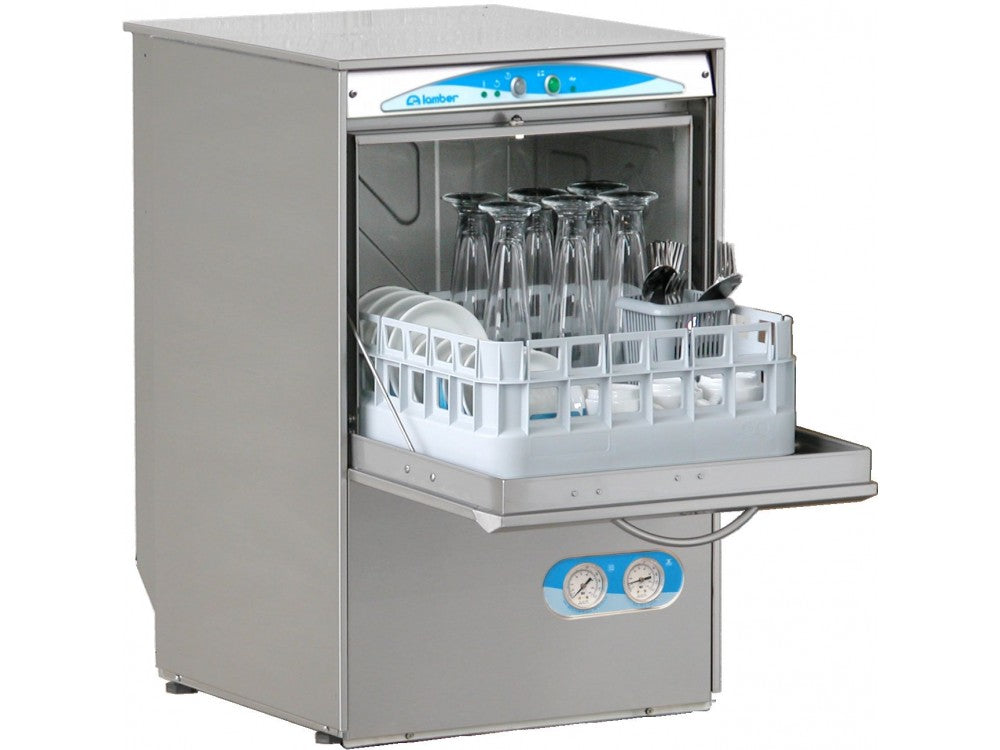























Choosing between high-temperature vs. low-temperature commercial dishwashers affects sanitation procedures, utility requirements, operating costs and day-to-day workflow. Both systems can support safe commercial warewashing when they are correctly specified, installed and operated, but the best choice depends on your kitchen's volume, available utilities and staff routines. For restaurants, cafés, bakeries, food trucks, caterers and institutions comparing kitchen equipment in Canada, here is what to consider before purchasing.

Recommended visual: pros-and-cons comparison of high-temperature and low-temperature commercial dishwashers.
What Is a High-Temperature Commercial Dishwasher?
A high-temperature commercial dishwasher uses hot water as the primary sanitizing method during the final rinse. These machines are common in full-service restaurants, hotels, catering kitchens and institutions where fast turnaround and heavier dish volume are priorities. Because the machine must achieve the manufacturer's required sanitizing conditions, installation may involve greater hot-water and electrical demand and, depending on the model and site, additional ventilation considerations.
Advantages of High-Temperature Dishwashers
High-temp systems can provide fast rack turnover and eliminate the need to rely on a chemical sanitizer for the final sanitizing step. Dishes also tend to leave the machine hotter, which can support faster drying. For busy operations, that can simplify workflow during peak service. Actual performance depends on incoming water temperature, booster-heater capacity, machine setup and proper maintenance.
Considerations for High-Temperature Machines
High-temperature machines can require more utility capacity and may involve a higher initial installation cost. Operators should confirm voltage, amperage, water-heating, drainage and ventilation requirements before ordering. In British Columbia, electrical equipment must carry acceptable evidence of certification or approval from an accredited certification body or another accepted approval process.
What Is a Low-Temperature Commercial Dishwasher?
A low-temperature dishwasher typically sanitizes with an approved chemical sanitizer rather than relying primarily on very hot final-rinse water. These machines can be attractive to cafés, bars, smaller restaurants and locations where electrical or hot-water capacity is more limited.
Advantages of Low-Temperature Dishwashers
Low-temp units may require less electrical and hot-water capacity, which can simplify installation in some kitchens. They can also be a practical choice for lower-volume operations where chemical warewashing procedures are already well managed.
Considerations for Low-Temperature Machines
Chemical sanitizer must be supplied, mixed and monitored correctly. British Columbia food-service establishments are required to maintain written sanitation procedures identifying cleaning and sanitizing requirements, including the sanitizing agents used, their concentrations and their uses. Operators using low-temperature machines therefore need a reliable process for checking sanitizer concentration and following the machine and chemical manufacturers' instructions.
High-Temperature vs. Low-Temperature: Quick Comparison
|
Factor |
High-Temperature |
Low-Temperature |
|
Sanitizing method |
Hot-water sanitizing |
Approved chemical sanitizer |
|
Utility demand |
Typically higher |
Often lower |
|
Chemical sanitizer |
Usually not required for final sanitizing |
Required |
|
Drying |
Dishes generally leave hotter |
May dry more slowly |
|
Best fit |
Medium- to high-volume kitchens |
Smaller or utility-constrained operations |
|
Main consideration |
Hot-water and electrical capacity |
Chemical concentration and monitoring |
Canadian Food-Safety Considerations
Regardless of dishwasher type, the goal is the same: equipment and utensils must be washed and sanitized effectively. B.C.'s Food Premises Regulation requires commercial food equipment and utensils to be durable, easily cleaned, kept in good working order and operated to support safe and sanitary food handling. It also requires operators to provide the facilities and equipment necessary for proper washing and sanitizing. Exact wash temperatures, rinse temperatures, chemical concentrations and cycle requirements can vary by dishwasher design and sanitizer. Follow the equipment manufacturer's specifications and confirm requirements with your local health authority rather than applying one temperature or chemical setting to every machine.
Which Dishwasher Is Right for Your Kitchen?
A busy restaurant, institutional kitchen or caterer may benefit from a high-temperature machine when fast throughput and hot-water capacity are available. A café, bar or smaller restaurant may find a low-temperature machine more practical when utility capacity is limited and staff can consistently manage sanitizer concentration. Before ordering, compare peak rack volume, installation space, electrical service, hot-water capacity, drainage, ventilation, chemical costs and local service support.
Brittania Food Equipment is a Canadian restaurant supply store serving food-service businesses across Surrey, Vancouver, the Lower Mainland, B.C. Interior, the Islands and Canada. Commercial dishwasher options are available for different operating needs.
Canadian & B.C. compliance references
• B.C. Food Premises Regulation
• Technical Safety BC - Approved Certification Marks for Electrical Products